Dayton sits roughly 17 km north-east of Perth's CBD, in the Swan Valley, in postcode 6055. The reading is SEIFA decile 8 at IRSAD 1022, in the 69th state percentile within Western Australia.
ABS 2021 IRSAD release. Score 1022 (national mean = 1000).
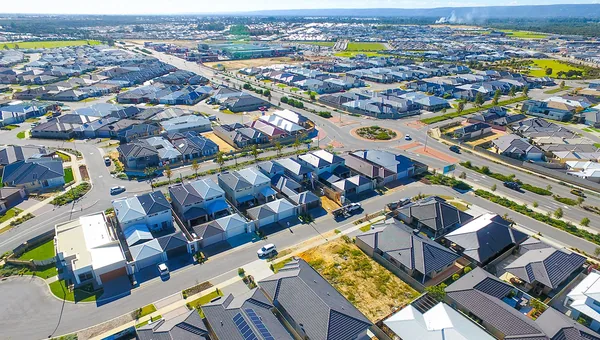
Decile 8 is a strong reading, and the 69th state percentile within WA reflects that. Dayton is one of the newer suburbs in the Swan Valley's residential expansion, with a meaningful share of master-planned estate stock and a demographic mix that skews younger and family-focused than the Perth metro average. PropertyRanker uses SEIFA as a primary signal for economic_strength, hazard_risk, and entry_point_risk. A decile 8 reading lifts the score on those three criteria, and the entry_point_risk reading in particular benefits from a postcode that is growing into its SEIFA reading rather than declining from it. The strategy match for 6055 is Growth or Balanced. The Yield strategy's 6% gross-yield anchor is rarely reachable in this postcode, since the price-to-rent ratio reflects the area's relative advantage. The Regional strategy is the wrong frame entirely, the suburb is firmly inside metropolitan Perth. The interesting question for any Dayton listing is the build quality and the body corporate (where applicable), since the suburb's stock is recent enough that defects and warranty issues are still relevant.
Dayton WA 6055 recorded a median house price of $815,000 over the 12 months to May 2026, reflecting annual capital growth of 16.43% according to yourinvestmentpropertymag.com.au (CoreLogic data). There were 103 house sales in the past 12 months with an average of just 8 days on market, signalling strong buyer demand. htag.com.au reports a typical price of $892,011 with stock on market at a very low 0.36%, reinforcing a tight supply environment in this rapidly developing City of Swan suburb.
Anchor points pulled per refresh from publicly available suburb profiles. Approximate; not a moving average.
Stock on market at 0.36% and average days on market of just 8 days (CoreLogic via YIP) both point to a strongly supply-constrained, fast-moving market, consistent with a hot temperature band.
Sources: Dayton WA 6055 Suburb Profile & Property Report (2026-09-04); Dayton WA 6055 Property Market and House Prices 2026 (2026-01-01); Dayton WA AU Suburb Profile - Smart Property Investment (2024-11-01); Dayton Suburb Profile - REIWA (2026-05-28) · Refreshed 14 Sep 2026
PropertyRanker scores any Australian property against 12 criteria across three pillars: Growth, Cashflow, and Risk. SEIFA is a primary signal for economic strength and a supporting one for entry-price risk. It also informs the crime side of hazard risk, though physical overlays like flood, bushfire and coastal exposure, and recorded crime data where available, take priority there. The decile of 8 shown above gives a listing in Dayton a stronger starting line on economic strength than the national median postcode, and a softer one on entry-price risk, since more advantaged postcodes usually carry higher entry prices.
On top of that, PropertyRanker chooses one of four strategies (Balanced, Growth, Yield, Regional) and applies a per-strategy yield anchor. The anchors are 3.5% for Growth, 5% for Balanced, 6% for Yield, and 7% for Regional. A postcode at this level of relative advantage tends to suit the Growth (3.5% anchor) and Balanced (5% anchor) strategies more readily than Yield (6%) or Regional (7%), because a higher entry price compresses the gross yield a listing can reach without a specific value-add.
Read the scoring guide for the full criteria list and how the verdict thresholds work.
SEIFA is a postcode-level read. The fastest sanity check on any single decile reading is to compare it against the suburbs that surround it.
Master-planned estate stock varies in build quality, and SEIFA cannot tell you which builder or which release a specific listing comes from. The Swan Valley's flood overlay matters for some Dayton listings, particularly those backing onto reserves or near the river. Body corporate health on any townhouse or duplex purchase, and the staging of remaining estate releases (which can push supply temporarily) both move the verdict more than the macro signal does. Score the listing in PropertyRanker for a verdict that takes those into account.
The data positions Dayton as a suburb with a genuine base for investment consideration. A SEIFA IRSAD of 1022 at decile 8, placing it at the 69th state percentile within Western Australia, indicates an advantaged demographic profile that PropertyRanker uses as a positive input into three of its twelve scoring criteria: economic_strength, hazard_risk, and entry_point_risk. The suburb is also noted as growing into its SEIFA reading rather than declining from it, which is a favourable signal on entry_point_risk. Whether a specific listing scores well depends on build quality, land size, and current pricing, so run the listing through PropertyRanker for the live output.
The analysis points to Capital Growth (around 3.5 percent gross-yield anchor) or Balanced (around 5 percent) as the strategy frames most consistent with Dayton's profile. The High Yield strategy targets around 6 percent gross yield, and the price-to-rent ratio in postcode 6055 reflects the area's relative advantage, making that anchor rarely reachable here. The Regional strategy is the wrong frame entirely, since Dayton sits roughly 17 km north-east of Perth's CBD and is firmly inside the metropolitan boundary.
Because Dayton's residential stock is recent, coming from the Swan Valley's master-planned estate expansion, build quality and construction defects are a live concern that standard due diligence should cover. Where a body corporate applies, reviewing its financials and any outstanding sinking-fund levies is particularly important for newer strata stock. Public transport access is also worth checking at the property level: the Ellenbrook line, part of Perth's Transperth network, was designed to serve this corridor, but proximity to a station varies considerably within postcode 6055. Score the specific listing on PropertyRanker to see how these factors interact with the suburb's underlying SEIFA signals.
PropertyRanker feeds the SEIFA IRSAD reading into three of its twelve criteria directly: economic_strength, hazard_risk, and entry_point_risk. Dayton's decile 8 score lifts all three, but SEIFA is a suburb-level signal and the twelve-criterion model also weighs listing-specific inputs such as property type, land component, and yield. The final score for any Dayton listing can differ meaningfully from the suburb average, so the SEIFA reading is best understood as a floor for those three criteria rather than a guarantee of a strong overall score.
The analysis describes Dayton's population as younger and family-focused relative to the Perth metro average, which is consistent with a suburb in active residential expansion driven by master-planned estate development. That demographic mix tends to support steady occupier demand for family-format dwellings (three and four-bedroom houses on titled lots), though it is less predictive of demand for higher-density or investor-grade units. The broader City of Swan context and employment catchment are worth verifying independently, since SEIFA measures relative socioeconomic advantage at a point in time rather than forecasting demand direction.
Paste a real address. Get a defensible verdict across 12 criteria in around three minutes.
Score a property free