Victoria · Postcode 3220

Geelong, VIC 3220: property investment analysis

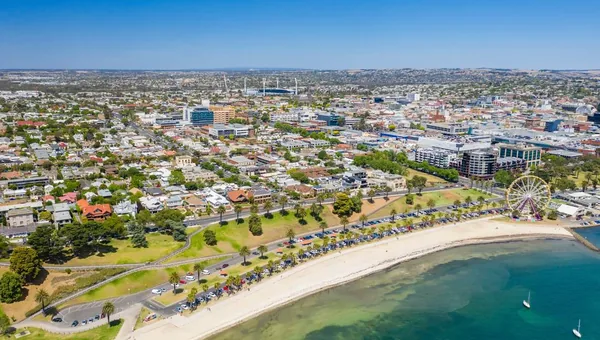
Geelong is Victoria's second-largest city, 75 km south-west of Melbourne on Corio Bay. The 3220 postcode covers Geelong CBD, Newtown, and the bayfront waterfront precinct, the highest-SEIFA cluster within Greater Geelong.

Geelong, VIC 3220 property investment analysis
9 / 10
SEIFA decile (IRSAD)
National relative advantage
84th
State percentile
vs all Victoria postcodes
1067
IRSAD score
National mean = 1000
Advantaged
Relative band
ABS 2021 Census release
SEIFA position
Where Geelong sits nationally
Decile 9
1 disadvantaged 5 median 10 advantaged

ABS 2021 IRSAD release. Score 1067 (national mean = 1000).

Reading the signal

What the SEIFA reading means for Geelong

Decile 9 is a strong reading, with the IRSAD score of 1067 sitting well above the national mean of 1000. State-percentile 84 puts central Geelong in the top sixth of Victorian postcodes, anchored by an income base of professionals working at the deakin Waterfront campus, GMHBA Stadium precinct businesses, and the financial-services cluster that grew out of the Transport Accident Commission HQ relocation. Geelong has been one of Australia's top-performing regional cities over the past decade. The Geelong Ring Road completion, the Avalon Airport upgrade, the WorkSafe Victoria HQ move, the Geelong Convention Centre, and consistent population growth (now over 290,000 Greater Geelong) have all stacked the demand side. The structural commute to Melbourne sits at 60 to 75 minutes on V/Line, which keeps the city in remote-work distance. Where Geelong gets interesting for investors is the mix. Newtown and Geelong West are tight, premium markets where growth is the play. East Geelong and Norlane (3214) sit several deciles below and lean to yield. The 3220 postcode itself trades like a tighter version of the Melbourne inner-west.

Recent market signal

What the data is doing right now in Geelong

According to yourinvestmentpropertymag.com.au (to June 2026), Geelong 3220 recorded a median house price of $935,000, reflecting 7.47% annual growth, with 66 house sales over the past 12 months and average days on market of 55. propertyvalue.com.au reports a median sale price of $871K (up 0.1% over 12 months) with an average vendor discount of -5.1% and 60 house sales, while SQM Research data cited by multiple sources puts the Greater Geelong vacancy rate at approximately 1.4%, indicating a tight rental market that underpins steady demand in the suburb.

Median price trend
5-point price path for Geelong
2022 2023 2024 2025 2026 $753k $935k

Anchor points pulled per refresh from publicly available suburb profiles. Approximate; not a moving average.

Market temperature
Buyer pressure right now in Geelong
Steady
Cold Cool Steady Warming Hot
Vacancy
stable
Days on market
stable
Vendor discount
stable

Vacancy is tight but stable at ~1.4% (SQM Research), days on market are moderate at 42-55 days with no clear directional shift, and vendor discounting of -5.1% is present but not widening materially, pointing to a steady market overall.

Sources: Geelong, VIC 3220: Suburb Profile & Property Report (2026-06-01); Geelong House Prices & Property Trends (2026-01-01); Geelong 3220 Suburb Profile: Investment & Sales Data (2026-01-01); GEELONG, VIC Property Prices & Market Trends (2025-12-01); Best Suburbs to Invest in Geelong 2026 (2026-04-01) · Refreshed 5 Oct 2026

Local property news

What is happening around Geelong

Geelong's property story is being shaped by large public infrastructure spending in the city centre, new residential estate delivery on the urban fringe, and a rail network upgrade that has improved commuter access to Melbourne, alongside a persistently tight rental market. Central Geelong is undergoing a long-term renewal push backed by hundreds of millions in public and approved works, while growth corridors such as Mount Duneed and Waurn Ponds are seeing new housing and station upgrades. Local planning tensions are also emerging over infill apartment proposals in nearby Bellarine towns. These drivers, rather than short-term price moves, are the key structural factors for investors looking at Geelong.

Planning reported May 2026

Geelong Authority 10 Year Report tracks Central Geelong renewal

The Minister for Planning released the Geelong Authority's 10 Year Report in May 2026, showing more than $1.4 billion of public facilities delivered or planned, including $799.5 million currently under construction and a further $799.3 million of approved works in the pipeline for the city centre.

Central Geelong | vic.gov.au (2026-05-28)

Infrastructure under construction, opening 2026

Nyaal Banyul Convention and Event Centre nears completion

The Nyaal Banyul Geelong Convention and Event Centre, a purpose built venue with a 1000 seat capacity and exhibition spaces funded through the Geelong City Deal, is under construction in the city centre and due to open in 2026.

Central Geelong | vic.gov.au

Development under construction, staged delivery to 2031

Silverbrook estate and Waurn Ponds station works under way

Construction is under way on almost 400 new homes, including about 100 social and affordable dwellings, at the Silverbrook estate in Mount Duneed near Waurn Ponds station, alongside a new sports precinct and planned station upgrades including a bus interchange, commuter car park and signalised intersection on Baanip Boulevard.

Building New Homes For A Growing Geelong | Premier (2026-06-20)

Transport completed late 2024, ongoing benefit

Geelong Line duplication completed, more services running

The Victorian and Australian governments completed an 8km track duplication between Waurn Ponds and South Geelong along with three station upgrades and removal of two level crossings, allowing five extra peak services per hour on the Geelong line.

Geelong Line Upgrade - Victoria's Big Build

Amenity under construction, main works from 2025

Barwon Women's and Children's Hospital under construction

The Barwon Women's and Children's Hospital, located within the University Hospital Geelong precinct, is being built to service the region's growing population, with main works commencing in early 2025.

Barwon Women's and Children's Hospital - Infrastructure Pipeline

Rental market reported 2026

Rental vacancy remains historically tight across Geelong

SQM Research data cited in early 2026 puts Geelong's overall rental vacancy rate at around 1.4 percent, with some individual suburbs as low as 0.5 percent, reflecting sustained tenant demand across the region.

Geelong Property Growth Forecast 2026 | Loan Market Geelong City
Central Geelong renewal and city deal fundingWaurn Ponds and Mount Duneed growth corridorGeelong line rail capacity upgradesUniversity Hospital Geelong health precincttight rental vacancyBellarine infill planning disputes

Updated 4 Jul 2026. Items link to their original sources. Compiled by AI from public reporting; verify anything material before relying on it.

How PropertyRanker scores

How a listing in Geelong would be scored

PropertyRanker scores any Australian property against 12 criteria across three pillars: Growth, Cashflow, and Risk. SEIFA is a primary signal for economic strength and a supporting one for entry-price risk. It also informs the crime side of hazard risk, though physical overlays like flood, bushfire and coastal exposure, and recorded crime data where available, take priority there. The decile of 9 shown above gives a listing in Geelong a stronger starting line on economic strength than the national median postcode, and a softer one on entry-price risk, since more advantaged postcodes usually carry higher entry prices.

On top of that, PropertyRanker chooses one of four strategies (Balanced, Growth, Yield, Regional) and applies a per-strategy yield anchor. The anchors are 3.5% for Growth, 5% for Balanced, 6% for Yield, and 7% for Regional. A postcode at this level of relative advantage tends to suit the Growth (3.5% anchor) and Balanced (5% anchor) strategies more readily than Yield (6%) or Regional (7%), because a higher entry price compresses the gross yield a listing can reach without a specific value-add.

Read the scoring guide for the full criteria list and how the verdict thresholds work.

Comparable postcodes

Nearby suburbs worth comparing

SEIFA is a postcode-level read. The fastest sanity check on any single decile reading is to compare it against the suburbs that surround it.

What this page cannot tell you

What an investor should still verify in Geelong

Newtown and the central waterfront are heritage-overlay heavy, particularly Victoriana along Pakington Street and the Aberdeen Street ridge. Read the Greater Geelong Heritage Overlay schedule for the specific lot before scoring any value-add. Coastal inundation overlays apply along the waterfront and parts of Western Beach Road. Check the Coastal Inundation and Erosion mapping under the Victorian Planning Schemes. The Spirit of Tasmania has relocated from Port Melbourne to Geelong (services from 2022), which has reshaped traffic patterns and freight movement around the western approach. Industrial-residential interface is real on the western edge near the former Ford plant site (Norlane and Corio postcodes adjacent), but not within the 3220 boundary itself. Apartment supply along the waterfront grew rapidly through 2018-2023 and there are pockets of strata stress in older buildings, particularly those with cladding remediation works pending. Check strata reports carefully for any apartment-stock listing in the CBD.

Questions investors ask

Geelong property investment: common questions

Does Geelong 3220 suit property investment, and what does its SEIFA score tell me?

The 3220 postcode records a SEIFA IRSAD decile of 9 out of 10, a raw score of 1067 against a national mean of 1000, and sits at the 84th percentile within Victoria, placing it in the advantaged band. PropertyRanker uses that reading to score three of its twelve criteria: economic_strength, hazard_risk, and entry_point_risk. For central Geelong, the decile 9 result signals a relatively resilient income base, anchored by employers such as WorkSafe Victoria at 1 Malop Street and the Deakin Waterfront campus, which tempers some of the downside risk a lower-decile postcode would carry. The data positions 3220 as a postcode worth running through the full scoring tool, particularly to stress-test entry price against the gross-yield anchors for your chosen strategy.

Which of PropertyRanker's four strategies fits Geelong 3220 best?

Given its decile 9 SEIFA reading and the analysis suggesting 3220 trades like a tighter version of the Melbourne inner-west, the postcode most closely aligns with the Capital Growth strategy, which targets a gross yield of around 3.5 percent. The premium Newtown and Geelong CBD precinct within 3220 tends to attract owner-occupier demand that compresses yields while supporting long-run capital appreciation. Investors chasing the High Yield or Regional anchors of 6 to 7 percent may find the numbers harder to reach here and should compare listings in lower-decile postcodes such as Norlane (3214) before committing. Score the specific listing on PropertyRanker to confirm which strategy band the current asking price actually supports.

What are the main investment risks to verify for a property in Geelong 3220?

The primary risk to scrutinise is entry-point risk: a decile 9 postcode with strong institutional employment and consistent population growth tends to price in optimism, so the gap between asking price and rental income warrants close checking against live yield data. Concentration risk in the public-sector employment base is a secondary consideration, given that large anchor tenants such as WorkSafe Victoria represent a meaningful share of the professional workforce here. The V/Line Geelong line, which connects Geelong Station to Southern Cross, is Victoria's most used regional rail service, so infrastructure is well-established, but reliability and overcrowding have historically been issues worth monitoring for tenants who commute. PropertyRanker's hazard_risk score will also flag any flood or coastal exposure in the bayfront precinct that a desktop search may not surface immediately.

How does the Melbourne commute factor into tenant demand for Geelong 3220?

The V/Line Geelong line runs to Southern Cross Station in Melbourne, with recent infrastructure upgrades including the South Geelong to Waurn Ponds duplication completed in August 2024 enabling up to five services per hour at peak. That makes a 60 to 75 minute commute realistic for tenants who travel to Melbourne regularly while renting in a lower-cost market. The remote-work shift has reinforced this dynamic further, as households can justify the distance when they commute only two or three days a week. This structural commuter demand is one of the demand-side factors the analysis highlights as supporting 3220 specifically, though an investor should verify current vacancy conditions for the specific property type via the PropertyRanker scoring tool.

What data does PropertyRanker actually use to score a listing in Geelong 3220?

PropertyRanker applies twelve scoring criteria across a listing, with SEIFA feeding directly into three of them: economic_strength (where the decile 9 reading for 3220 produces a strong input), hazard_risk, and entry_point_risk. The remaining nine criteria draw on listing-level data, so the score shifts with each property's asking price, dwelling type, and local supply conditions rather than applying a single suburb-wide number. Because the tool uses live data, the yield figures, vacancy signals, and strategy-band outputs you see for a 3220 listing today may differ from those of a neighbouring listing or even the same property repriced next month. Running the score on the specific address rather than relying on suburb averages is the only way to get a reading that reflects current market conditions.

Score a listing in Geelong

Paste a real address. Get a defensible verdict across 12 criteria in around three minutes.

Score a property free