New South Wales · Postcode 2747

Jordan Springs, NSW 2747: property investment analysis

Jordan Springs sits in western Sydney inside postcode 2747, within Penrith City. The reading is SEIFA decile 6 at IRSAD 986, in the 52nd state percentile within New South Wales.

Jordan Springs, NSW 2747 property investment analysis
6 / 10
SEIFA decile (IRSAD)
National relative advantage
52nd
State percentile
vs all New South Wales postcodes
986
IRSAD score
National mean = 1000
Mid-band
Relative band
ABS 2021 Census release
SEIFA position
Where Jordan Springs sits nationally
Decile 6
1 disadvantaged 5 median 10 advantaged

ABS 2021 IRSAD release. Score 986 (national mean = 1000).

Reading the signal

What the SEIFA reading means for Jordan Springs

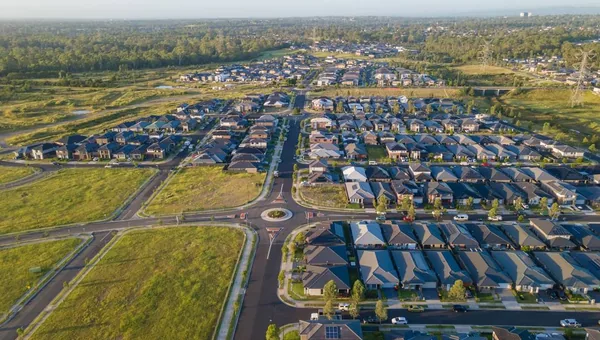
Decile 6 is a mid-band reading, just below the national mean of 1000. Jordan Springs is one of western Sydney's master-planned-community examples, with a stock profile that leans heavily on detached and townhouse releases from the past fifteen years. The postcode 2747 contains a mix of older Penrith-area residential and the newer Jordan Springs releases, which makes the SEIFA reading a blended signal rather than a suburb-specific one. PropertyRanker uses SEIFA as a primary signal for economic_strength, hazard_risk, and entry_point_risk. A decile 6 reading places Jordan Springs near the middle of the model on those three criteria. The structural lift in 2747 sits outside the SEIFA window. Western Sydney's broader infrastructure pipeline, including the Western Sydney Airport, the Sydney Metro extensions, and the M12 motorway, all feed into demand_pressure for postcodes inside the affected catchment. The strategy match for Jordan Springs typically leans Balanced or Growth. The Yield strategy's 6% gross-yield anchor is rarely reachable on newer estate stock, since the price-to-rent ratio reflects the master-planned-community premium. The interesting question for any Jordan Springs listing is the body corporate (where applicable) and the proximity to the lake-and-recreation precinct that anchors the suburb.

Recent market signal

What the data is doing right now in Jordan Springs

Jordan Springs NSW 2747 recorded a median house sale price of approximately $1.1M over the past 12 months, representing 8.1% annual growth, with 211 houses sold and an average vendor discount of -6.2%, according to propertyvalue.com.au. Days on market for houses sits at a brisk 19 days and the rental vacancy rate is a stable 1.33%-1.4% as reported by realhomesrealty.com.au (Q2 2026) and realsearch.com.au, pointing to sustained buyer and tenant demand. Historical data from adviseable.com.au (sourced from pricefinder) shows the all-house median has risen from $825,000 in 2021 to around $975,000 by 2024, with further gains into 2026.

Median price trend
5-point price path for Jordan Springs
2021 2022 2023 2024 2026 $825k $1,100k

Anchor points pulled per refresh from publicly available suburb profiles. Approximate; not a moving average.

Market temperature
Buyer pressure right now in Jordan Springs
Warming
Cold Cool Steady Warming Hot
Vacancy
stable
Days on market
shortening
Vendor discount
narrowing

DOM is short at 19 days and vendor discounting is limited at -6.2% (narrowing), while vacancy at 1.33-1.4% is stable, giving two of three signals in sellers' favour and placing the market in the warming band.

Sources: Jordan Springs House Prices & Property Trends (2026-01-01); Jordan Springs Property Market Report Q2 2026 (2026-07-01); Jordan Springs NSW 2747 Suburb Profile - yourinvestmentpropertymag.com.au (2026-01-01); Suburb Flyover Report Jordan Springs (House) - adviseable.com.au (2024-11-01); Jordan Springs NSW 2747 - realsearch.com.au (2026-03-05) · Refreshed 1 Oct 2026

How PropertyRanker scores

How a listing in Jordan Springs would be scored

PropertyRanker scores any Australian property against 12 criteria across three pillars: Growth, Cashflow, and Risk. SEIFA is a primary signal for economic strength and a supporting one for entry-price risk. It also informs the crime side of hazard risk, though physical overlays like flood, bushfire and coastal exposure, and recorded crime data where available, take priority there. The decile of 6 shown above gives a listing in Jordan Springs a stronger starting line on economic strength than the national median postcode, and a softer one on entry-price risk, since more advantaged postcodes usually carry higher entry prices.

On top of that, PropertyRanker chooses one of four strategies (Balanced, Growth, Yield, Regional) and applies a per-strategy yield anchor. The anchors are 3.5% for Growth, 5% for Balanced, 6% for Yield, and 7% for Regional. A postcode at this level of relative advantage tends to suit the Growth (3.5% anchor) and Balanced (5% anchor) strategies more readily than Yield (6%) or Regional (7%), because a higher entry price compresses the gross yield a listing can reach without a specific value-add.

Read the scoring guide for the full criteria list and how the verdict thresholds work.
What this page cannot tell you

What an investor should still verify in Jordan Springs

Master-planned-community stock varies sharply by builder and release date. SEIFA cannot tell you which release a listing comes from, how the body corporate has handled early-life landscaping and infrastructure, or whether the lake-and-wetland system has had any water-quality issues. The Penrith-region bushfire overlay touches parts of 2747, and the BAL assessment for a specific listing matters. Score the listing in PropertyRanker for a verdict that accounts for these.

Questions investors ask

Jordan Springs property investment: common questions

Does Jordan Springs suit property investment, and what does its SEIFA score indicate about the suburb?

PropertyRanker scores Jordan Springs at SEIFA decile 6 with a raw IRSAD of 986, sitting just below the national mean of 1000 and at the 52nd state percentile within New South Wales. That mid-band reading places the suburb near the middle of the model on three of its twelve criteria: economic_strength, hazard_risk, and entry_point_risk. The SEIFA signal here is also a blended one, because postcode 2747 covers both older Penrith-area residential stock and the newer master-planned releases at Jordan Springs, so it does not reflect either part of the postcode in isolation. What the data suggests is a suburb without a strong top-decile economic tailwind, but also without the elevated risk flags that come with a bottom-quartile reading.

Which of PropertyRanker's four strategies is the best fit for a Jordan Springs listing?

The analysis points toward the Balanced or Capital Growth strategies as the most consistent fits for Jordan Springs. The High Yield strategy targets a gross-yield anchor of around 6 percent, and that threshold is rarely reached on newer estate stock here because the price-to-rent ratio reflects the master-planned-community premium baked into the suburb's detached and townhouse releases. The broader western Sydney infrastructure pipeline, including the Western Sydney Airport, the Sydney Metro extensions, and the M12 motorway, feeds the demand_pressure inputs that support a growth or balanced thesis rather than a pure yield play. Run the specific listing through PropertyRanker to see whether that individual property's numbers shift the strategy match.

What are the main investment risks to flag for a Jordan Springs property?

Three risks stand out in the analysis. First, the postcode's SEIFA reading is a blended signal across older Penrith stock and newer Jordan Springs releases, so it can obscure the actual economic profile of a specific street or estate stage. Second, newer estate properties carry body corporate fees where applicable, and those fees directly affect net yield calculations. Third, Jordan Springs has no train station of its own; the nearest rail access is Penrith station, roughly a seven-to-ten minute drive away, which means tenant demand is more car-dependent than it would be in a rail-connected suburb, and that should be weighed against the suburb's amenity strengths such as the lake-and-recreation precinct.

How does PropertyRanker use SEIFA data when scoring a Jordan Springs listing?

PropertyRanker uses the SEIFA IRSAD reading as a primary input for three of its twelve scoring criteria: economic_strength, hazard_risk, and entry_point_risk. For Jordan Springs, the decile 6 reading at a raw score of 986 produces a near-middle result on all three of those criteria, neither penalising the suburb heavily nor awarding it the uplift that a top-decile reading would provide. Because the postcode 2747 SEIFA figure is a blended signal, PropertyRanker supplements it with listing-level data points when you score a specific property, so the final composite score will reflect more than just the suburb average.

Does the wider western Sydney infrastructure pipeline improve the investment case for Jordan Springs?

The analysis identifies the Western Sydney Airport, the Sydney Metro extensions, and the M12 motorway as infrastructure inputs that feed into PropertyRanker's demand_pressure scoring for postcodes inside the affected catchment, and Jordan Springs sits within that catchment at approximately 17 kilometres from the airport site. That pipeline does not replace the need to verify a specific listing's fundamentals, because demand_pressure is only one of twelve scoring criteria and infrastructure timelines can shift. The more immediate connectivity question to verify is the bus and road access to Penrith station, which remains the primary rail connection for Jordan Springs residents today.

Score a listing in Jordan Springs

Paste a real address. Get a defensible verdict across 12 criteria in around three minutes.

Score a property free