Queensland · Postcode 4132

Marsden, QLD 4132: property investment analysis

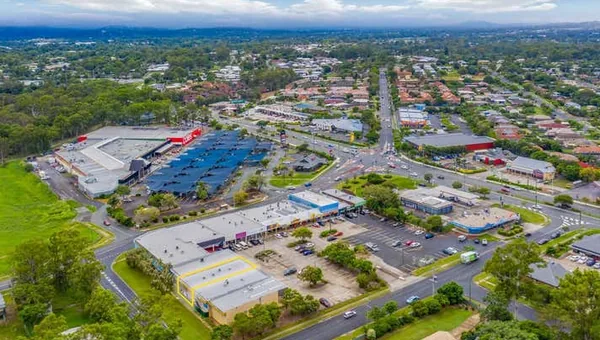
Marsden sits in Logan City roughly 30 km south of Brisbane, in postcode 4132. The postcode reads SEIFA decile 1 at IRSAD 845, in the 4th state percentile within Queensland.

Marsden, QLD 4132 property investment analysis
1 / 10
SEIFA decile (IRSAD)
National relative advantage
4th
State percentile
vs all Queensland postcodes
845
IRSAD score
National mean = 1000
Disadvantaged
Relative band
ABS 2021 Census release
SEIFA position
Where Marsden sits nationally
Decile 1
1 disadvantaged 5 median 10 advantaged

ABS 2021 IRSAD release. Score 845 (national mean = 1000).

Reading the signal

What the SEIFA reading means for Marsden

A decile 1 reading in the 4th state percentile is one of the lower SEIFA bands in Queensland. The postcode sits in Logan's tenant-heavy belt, with older housing stock and a demographic mix that has historically supported strong rental absorption at lower price points. PropertyRanker uses SEIFA as a primary signal for economic_strength, hazard_risk, and entry_point_risk. A decile 1 reading drags the score on those three criteria. What partially balances it for Marsden is rental_market_depth, where the suburb consistently shows strong absorption because the underlying demand for affordable rental stock in southern Logan is structural rather than cyclical. The strategy match is Yield, almost exclusively. The 6% gross-yield anchor for the Yield strategy is meet-able on a meaningful proportion of older detached stock in 4132, and the rental criteria respond more positively than the SEIFA signal would imply. The risk read is consistent with Loganlea's: the SEIFA reading is doing real work, tenant-quality variance is wider than in higher-decile postcodes, and the management cost embedded in a yield-on-paper number is higher than it looks.

Recent market signal

What the data is doing right now in Marsden

Marsden QLD 4132 recorded a median house sale price of $754,100 as at September 2025, reflecting 8.08% annual capital growth, with 185 house sales over the prior 12 months, according to CoreLogic data published via yourinvestmentpropertymag.com.au. propertyvalue.com.au (CoreLogic) separately reported a median sale price of $730,000 with a 15.87% one-year price change, while domain.com.au data for an individual property cited a suburb median of $875,000 and a vacancy rate of 0.49% as at mid-2026. Days on market for houses sits at 16 days per yourinvestmentpropertymag.com.au, with htag.com.au noting a vacancy rate of 1.1% and stock on market of 0.44%, pointing to a market with firm demand and limited supply pressure.

Median price trend
4-point price path for Marsden
2022 2024 2025 2026 $572k $875k

Anchor points pulled per refresh from publicly available suburb profiles. Approximate; not a moving average.

Market temperature
Buyer pressure right now in Marsden
Warming
Cold Cool Steady Warming Hot
Vacancy
tightening
Days on market
shortening
Vendor discount
not assessed

Vacancy at 0.49%-1.1% is low and supportive of rental demand, days on market at 16 days is fast, and stock on market is minimal at 0.44%, indicating two of three directional signals are tightening.

Sources: Marsden, QLD 4132: Suburb Profile & Property Report | YIP (2025-12-25); Marsden House Prices & Property Trends | propertyvalue.com.au (2025-01-01); Marsden, QLD 4132 Property Market and House Prices 2026 | htag.com.au (2026-01-01); 4 Taree Street, Marsden QLD 4132 Property Profile | Domain (2026-08-15) · Refreshed 4 Sep 2026

How PropertyRanker scores

How a listing in Marsden would be scored

PropertyRanker scores any Australian property against 12 criteria across three pillars: Growth, Cashflow, and Risk. SEIFA is a primary signal for economic strength and a supporting one for entry-price risk. It also informs the crime side of hazard risk, though physical overlays like flood, bushfire and coastal exposure, and recorded crime data where available, take priority there. The decile of 1 shown above gives a listing in Marsden a softer starting line on economic strength, though often a firmer one on entry-price risk, since less advantaged postcodes usually carry lower entry prices.

On top of that, PropertyRanker chooses one of four strategies (Balanced, Growth, Yield, Regional) and applies a per-strategy yield anchor. The anchors are 3.5% for Growth, 5% for Balanced, 6% for Yield, and 7% for Regional. A postcode at this level tends to make the Yield (6% anchor) and Regional (7% anchor) strategies more reachable, because a lower entry price lifts the gross yield a listing can achieve, while a Growth result usually depends on a specific catalyst such as an infrastructure or renewal pipeline.

Read the scoring guide for the full criteria list and how the verdict thresholds work.
Comparable postcodes

Nearby suburbs worth comparing

SEIFA is a postcode-level read. The fastest sanity check on any single decile reading is to compare it against the suburbs that surround it.

What this page cannot tell you

What an investor should still verify in Marsden

SEIFA is a postcode-level read, and Marsden's housing varies materially by street. Tenant quality, recent rental arrears history on the specific block, and the actual condition of the building all matter more in this postcode than the headline decile. The Logan Hospital precinct's reach varies street by street, and listings that benefit from it are not interchangeable with listings that do not. Score the listing for a verdict that accounts for these.

Questions investors ask

Marsden property investment: common questions

Does Marsden (4132) suit property investment, and what does the SEIFA score tell me?

The SEIFA IRSAD reading for 4132 sits at 845, placing it in decile 1 of 10 and the 4th state percentile within Queensland, which puts it firmly in the disadvantaged band. PropertyRanker uses that reading as a primary signal for economic_strength, hazard_risk, and entry_point_risk, so those three criteria score low. What the data suggests is that Marsden is not a broad-strategy suburb; it is a yield-oriented postcode where structural rental demand from the affordable end of the market partially offsets the drag from the SEIFA signal. Investors should verify a specific listing through the scoring tool rather than treating the suburb label as a uniform verdict.

Which of PropertyRanker's four strategies fits Marsden best, and why not the others?

The High Yield strategy, anchored around a 6 percent gross yield, is the closest strategic fit for Marsden 4132, because older detached stock in this part of Logan's tenant-heavy belt has historically supported rental returns at that range. The Capital Growth strategy (anchored around 3.5 percent gross yield) assumes a stronger socioeconomic base than a decile 1 SEIFA reading provides, and the Balanced strategy similarly relies on economic_strength criteria that drag here. The Regional strategy targets higher yield anchors still, but Marsden is suburban rather than regional in character, so that framing does not align with the postcode's fundamentals.

What are the main investment risks to verify before scoring a Marsden listing?

The SEIFA reading is doing real work on three of PropertyRanker's twelve criteria, which means tenant-quality variance is wider here than in higher-decile postcodes across greater Brisbane. Management costs embedded in any yield-on-paper figure tend to run higher in postcode 4132 than the gross number implies, so the net yield after vacancies, arrears, and management fees warrants close scrutiny. Marsden sits within Logan City's broader creek and low-lying drainage network, and individual lots can carry localised flood exposure; Logan City Council's online mapping tools and Queensland's FloodCheck portal are the appropriate starting points for a property-level hazard check. Score the specific listing on PropertyRanker to see how hazard_risk and entry_point_risk weigh against the rental_market_depth signal for that address.

What data does PropertyRanker use to score a listing in Marsden, and how does SEIFA feed into it?

PropertyRanker runs twelve scoring criteria across a listing, and SEIFA IRSAD feeds directly into three of them: economic_strength, hazard_risk, and entry_point_risk. For Marsden, the decile 1 reading at IRSAD 845 depresses those three criteria relative to the Queensland average, but the rental_market_depth criterion responds more positively because demand for affordable rental stock in southern Logan is structural rather than cyclical. The remaining criteria, including transport access (Marsden is served by bus routes connecting to the broader Beenleigh rail corridor via Kingston and Loganlea stations) and dwelling characteristics, are assessed at the listing level. Running the specific address through the tool is the only way to see how all twelve criteria combine for a given property.

Is rental demand in Marsden reliable, or is it driven by short-term factors?

The analysis flags rental absorption in 4132 as structural rather than cyclical, meaning it is underpinned by persistent demand for affordable accommodation in southern Logan rather than by a temporary population surge or infrastructure event. That is a useful counterweight to the low SEIFA reading, but it does not eliminate risk; a decile 1 postcode by definition has a wider spread of tenant outcomes, and vacancy rates and arrears can move more sharply during economic downturns than in higher-decile suburbs. Investors should treat the rental_market_depth signal as a floor rather than a ceiling, and confirm current vacancy conditions for 4132 via the PropertyRanker listing score before drawing conclusions about a specific property.

Score a listing in Marsden

Paste a real address. Get a defensible verdict across 12 criteria in around three minutes.

Score a property free