Morayfield sits roughly 45 km north of Brisbane in postcode 4506. The reading is SEIFA decile 2 at IRSAD 905, putting the postcode in the 21st state percentile within Queensland.
ABS 2021 IRSAD release. Score 905 (national mean = 1000).
A decile 2 reading is a clearly below-average signal, and the 21st state percentile reflects that. The postcode sits in Brisbane's affordability belt north of the CBD, a corridor that consistently shows up in screening as a yield play because the headline pricing is lower than coastal Brisbane equivalents. PropertyRanker treats SEIFA as a primary signal for economic_strength, hazard_risk, and entry_point_risk. A decile 2 reading drags the score on those three criteria, but the lower entry price typically lifts the rental_yield criterion and the entry_point_risk reading in a balancing direction. The strategy match in 4506 is usually Yield or Balanced. The Yield anchor of 6% gross is meet-able for some sub-stock in Morayfield, particularly older detached dwellings, where the rent-to-price ratio is friendlier than in inner Brisbane. What separates a workable listing from a marginal one in this postcode is usually condition, tenant quality, and proximity to the train line, none of which SEIFA can measure.
Morayfield (QLD 4506) recorded a median house sale price of approximately $835,000, $900,000 over the 12 months to mid-2026, with annual price growth of around 16.8%, 20.0% according to propertyvalue.com.au and yourinvestmentpropertymag.com.au. There were 580, 585 house sales in the past 12 months, with properties averaging just 13, 15 days on market, signalling strong buyer demand. However, an average vendor discount of -5.0% (propertyvalue.com.au) and rising stock on market temper the overall picture, pointing to a market that is active but not uniformly seller-dominated.
Anchor points pulled per refresh from publicly available suburb profiles. Approximate; not a moving average.
Days on market are very short at 13, 15 days (shortening), but a -5.0% average vendor discount (widening) and rising stock on market (loosening vacancy) mean two of three signals are softening, placing the market in the cool band.
Sources: Morayfield House Prices & Property Trends (2026-06-01); Morayfield, QLD 4506: Suburb Profile & Property Report (2026-05-01); MORAYFIELD QLD 4506 – Dewar Estate Agents (2026-06-01); The Morayfield Growth Report – Affinity Property (2026-06-01); Real Estate Morayfield QLD 4506 – Microburbs (2026-02-01) · Refreshed 2 Oct 2026
PropertyRanker scores any Australian property against 12 criteria across three pillars: Growth, Cashflow, and Risk. SEIFA is a primary signal for economic strength and a supporting one for entry-price risk. It also informs the crime side of hazard risk, though physical overlays like flood, bushfire and coastal exposure, and recorded crime data where available, take priority there. The decile of 2 shown above gives a listing in Morayfield a softer starting line on economic strength, though often a firmer one on entry-price risk, since less advantaged postcodes usually carry lower entry prices.
On top of that, PropertyRanker chooses one of four strategies (Balanced, Growth, Yield, Regional) and applies a per-strategy yield anchor. The anchors are 3.5% for Growth, 5% for Balanced, 6% for Yield, and 7% for Regional. A postcode at this level tends to make the Yield (6% anchor) and Regional (7% anchor) strategies more reachable, because a lower entry price lifts the gross yield a listing can achieve, while a Growth result usually depends on a specific catalyst such as an infrastructure or renewal pipeline.
Read the scoring guide for the full criteria list and how the verdict thresholds work.
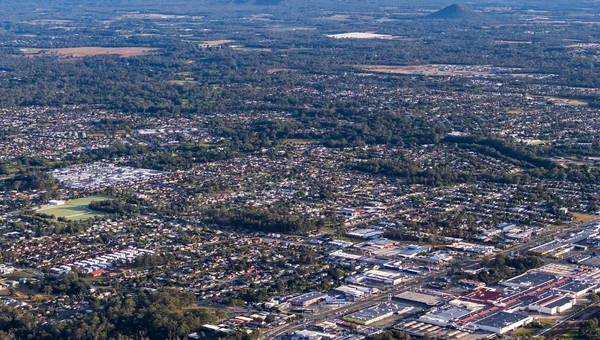
SEIFA is a postcode-level read. The fastest sanity check on any single decile reading is to compare it against the suburbs that surround it.
Morayfield's postcode covers a broad mix of older and newer residential, with some pockets that have seen tenancy churn and others that have settled. SEIFA cannot tell you which street, which estate, or which build vintage you are looking at. The Caboolture-Morayfield train-line frequency, recent council infrastructure spending, and the actual condition of the property all matter more than the macro signal in this postcode. Score the listing for a verdict that accounts for those.
The SEIFA IRSAD score of 905 puts Morayfield at the 21st state percentile within Queensland, which PropertyRanker flags as a disadvantaged reading. That drags scores on the economic_strength, hazard_risk, and entry_point_risk criteria, so this is not a suburb where the data signals broad investment confidence across all listing types. What the data does suggest is a narrower, yield-oriented case for specific sub-stock, particularly older detached dwellings where the rent-to-price ratio is more favourable than in inner Brisbane; score the specific listing on PropertyRanker to see how those trade-offs resolve for a given address.
The analysis points most consistently to the High Yield strategy (anchored around 6 percent gross) and, for some listings, the Balanced strategy (anchored around 5 percent). The suburb sits in Brisbane's northern affordability corridor, where lower headline pricing relative to coastal Brisbane equivalents tends to lift the rental_yield criterion even as the SEIFA decile 2 reading suppresses the three SEIFA-linked criteria. Capital Growth strategy alignment is harder to support at this SEIFA level because that strategy relies on stronger economic_strength signals than a decile 2 postcode typically provides.
The SEIFA decile 2 reading directly reduces scores on economic_strength and hazard_risk, reflecting the statistically higher incidence of financial stress and correlated hazard exposure in lower-decile postcodes. Morayfield sits within the Burpengary Creek catchment area, and Moreton Bay Regional Council maintains an active flood hazard overlay for the region, so individual lot-level flood exposure is a material variable that differs street by street and must be checked against Council's flood check property report tool. Beyond those SEIFA-linked signals, the analysis identifies condition, tenant quality, and proximity to the Morayfield railway station (which is served by Queensland Rail's Caboolture and Sunshine Coast lines into the Brisbane CBD) as differentiators that no area-level score can capture.
PropertyRanker runs twelve scoring criteria across four strategies; SEIFA IRSAD feeds directly into three of them (economic_strength, hazard_risk, and entry_point_risk), using the decile 2 and raw score of 905 recorded for this postcode. The remaining criteria draw on listing-level inputs such as the asking price, estimated rent, property condition, and proximity to infrastructure including the local train line, none of which are captured in the area-level SEIFA figure. Scoring a specific listing rather than reading the suburb profile is the only way to see how a particular address resolves across all twelve criteria.
Yes, proximity to the train line is one of the listing-level variables the analysis specifically flags as separating a workable listing from a marginal one in this postcode. Morayfield railway station is served by Queensland Rail on the Caboolture and Sunshine Coast lines, with services running into the Brisbane CBD, which supports tenant demand for commuter households. Because SEIFA cannot measure locational attributes within a suburb, two properties in 4506 at the same price can score meaningfully differently depending on their walkable distance to the station; use PropertyRanker's listing-level score to quantify that difference for a specific address.
Paste a real address. Get a defensible verdict across 12 criteria in around three minutes.
Score a property free