New South Wales · Postcode 2800

Orange, NSW 2800: property investment analysis

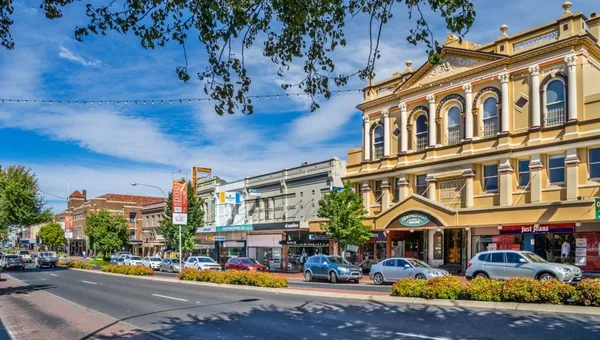
Orange sits in the NSW central west roughly 250 km west of Sydney, in postcode 2800. The reading is SEIFA decile 6 at IRSAD 988, in the 53rd state percentile within New South Wales.

Orange, NSW 2800 property investment analysis
6 / 10
SEIFA decile (IRSAD)
National relative advantage
53rd
State percentile
vs all New South Wales postcodes
988
IRSAD score
National mean = 1000
Mid-band
Relative band
ABS 2021 Census release
SEIFA position
Where Orange sits nationally
Decile 6
1 disadvantaged 5 median 10 advantaged

ABS 2021 IRSAD release. Score 988 (national mean = 1000).

Reading the signal

What the SEIFA reading means for Orange

Decile 6 is a mid-band reading, sitting just below the national mean of 1000. Orange's profile within regional NSW has shifted over the past decade as the city's role as a medical and education hub has consolidated. The Orange Health Service, Charles Sturt University's Orange campus, and the agricultural and mining services base all contribute to a more diversified employment mix than smaller regional centres carry. PropertyRanker uses SEIFA as a primary signal for economic_strength, hazard_risk, and entry_point_risk. A decile 6 reading places Orange near the middle of the model on those three criteria. The lift on demand_pressure and rental_market_depth comes from the medical-and-education base, which supports a more stable renter demographic than single-industry regional centres provide. The strategy match for 2800 typically leans Balanced or Yield. The Yield strategy's 6% gross-yield anchor is reachable on older detached stock and some unit stock in Orange, and the Balanced strategy's 5% anchor fits the broader newer-stock segment. The interesting question for any Orange listing is whether the recent regional-NSW price growth has been absorbed into the listing's guide price already, and that is a listing-level question rather than a postcode-level one.

Recent market signal

What the data is doing right now in Orange

Orange NSW 2800 recorded a median house price of $730,000 in Q4 2025, up 7.8% year-on-year, according to PRD Research's 1st Half 2026 market update; yourinvestmentpropertymag.com.au puts the current figure at $737,000 with 8.38% annual growth to April 2026. Sales volumes rose 14.9% in Q4 2025 versus Q4 2024 (PRD Research), with 1,000 house sales recorded over the 12 months to April 2026. propertyvalue.com.au reports an average vendor discount of -4.5%, while PRD Research confirms the vacancy rate tightened to 1.0% in December 2025, down from 2.0% in December 2023, signalling a supply-constrained rental market.

Median price trend
4-point price path for Orange
2023 2024 2025 2026 $680k $737k

Anchor points pulled per refresh from publicly available suburb profiles. Approximate; not a moving average.

Market temperature
Buyer pressure right now in Orange
Warming
Cold Cool Steady Warming Hot
Vacancy
tightening
Days on market
shortening
Vendor discount
stable

Vacancy has tightened materially from 2.0% (Dec 2023) to 1.0% (Dec 2025) and days on market have shortened to 38 days (Apr 2026) from 45 days, while vendor discounting remains steady at around -4.5%, placing the market in the warming band.

Sources: Orange Property Market Update 1st Half 2026 (2026-03-01); Orange Property Market Update 2nd Half 2025 (2025-07-01); Orange Property Market Update 2nd Half 2024 (2024-07-01); Orange, NSW 2800: Suburb Profile & Property Report (2026-04-01); Orange House Prices & Property Trends (2025-11-01) · Refreshed 4 Oct 2026

How PropertyRanker scores

How a listing in Orange would be scored

PropertyRanker scores any Australian property against 12 criteria across three pillars: Growth, Cashflow, and Risk. SEIFA is a primary signal for economic strength and a supporting one for entry-price risk. It also informs the crime side of hazard risk, though physical overlays like flood, bushfire and coastal exposure, and recorded crime data where available, take priority there. The decile of 6 shown above gives a listing in Orange a stronger starting line on economic strength than the national median postcode, and a softer one on entry-price risk, since more advantaged postcodes usually carry higher entry prices.

On top of that, PropertyRanker chooses one of four strategies (Balanced, Growth, Yield, Regional) and applies a per-strategy yield anchor. The anchors are 3.5% for Growth, 5% for Balanced, 6% for Yield, and 7% for Regional. A postcode at this level of relative advantage tends to suit the Growth (3.5% anchor) and Balanced (5% anchor) strategies more readily than Yield (6%) or Regional (7%), because a higher entry price compresses the gross yield a listing can reach without a specific value-add.

Read the scoring guide for the full criteria list and how the verdict thresholds work.
What this page cannot tell you

What an investor should still verify in Orange

Orange has bushfire overlay across parts of the postcode, particularly toward the more elevated outer streets. SEIFA cannot tell you about the BAL assessment, the heritage overlay on older central streets, or the actual condition of older detached stock. Hospital-precinct walking-distance varies sharply within 2800. Score the listing in PropertyRanker for a verdict that accounts for these.

Questions investors ask

Orange property investment: common questions

Does Orange (postcode 2800) suit property investment, or is it too far from Sydney?

The data suggests Orange is worth analysing rather than dismissing on distance alone. Its role as a regional hub for health, education, and agricultural and mining services produces a more diversified employment base than single-industry regional centres, which supports rental demand depth and a more stable renter demographic. A SEIFA decile 6 reading at IRSAD 988 places the suburb near the middle of the PropertyRanker model on economic_strength and entry_point_risk, neither a strong positive nor a flag. The key question is whether a specific listing's guide price already reflects recent regional-NSW price growth, and that is a listing-level assessment, not a postcode-level one.

Which of PropertyRanker's four strategies fits Orange 2800 best?

The analysis points to Balanced (targeting around a 5 percent gross yield) and High Yield (around 6 percent) as the two most relevant strategies for this postcode. The 6 percent anchor tends to be more reachable on older detached stock and some unit stock, while the 5 percent Balanced anchor fits the broader newer-stock segment better. Capital Growth strategy, which anchors around 3.5 percent, is harder to justify at decile 6 without stronger land-value fundamentals, and the Regional strategy at around 7 percent would require very selective stock identification. Score the individual listing on PropertyRanker to see which strategy it aligns with given its actual numbers.

What are the main investment risks PropertyRanker flags for Orange?

Three of PropertyRanker's twelve scoring criteria use SEIFA as a primary signal: economic_strength, hazard_risk, and entry_point_risk. At decile 6 with a raw score of 988, sitting just below the national mean, Orange scores in the mid-range on all three, meaning none of those criteria produce a strong green signal. On the hazard side, Orange City Council has a formal flood development control plan covering Blackmans Swamp Creek, which is the major drainage catchment of the city, so flood overlay on any specific parcel should be checked against council mapping before proceeding. The entry_point_risk question, whether recent regional-NSW price growth has been absorbed into current asking prices, is the most active variable to verify at listing level.

What data does PropertyRanker use to score a listing in Orange 2800?

PropertyRanker applies twelve scoring criteria, of which three draw directly on Orange's SEIFA IRSAD reading of 988 (decile 6, 53rd state percentile): economic_strength, hazard_risk, and entry_point_risk. Additional criteria including demand_pressure and rental_market_depth are informed by the medical and education employment base anchored by Orange Health Service and the Charles Sturt University Orange campus. The remaining criteria are calculated from listing-level inputs such as the asking price, property type, and configuration, so the postcode-level SEIFA score sets the floor and ceiling on three dimensions while the listing itself drives the rest.

Does Orange have rail access to Sydney, and does that factor into PropertyRanker's scoring?

Orange is served by the NSW TrainLink Central West XPT, a daily service operating between Sydney and Dubbo that stops at Orange station on the Main Western line. Coach connections to Lithgow and the broader rail network also operate from the postcode. PropertyRanker does not score rail access as a standalone criterion, but connectivity contributes to the demand_pressure signal indirectly through the employment and population stability it supports in regional centres. Investors who weight commuter access heavily should verify current timetables directly with NSW TrainLink, as service frequency and travel times in regional NSW can change independently of property market conditions.

Score a listing in Orange

Paste a real address. Get a defensible verdict across 12 criteria in around three minutes.

Score a property free