Redcliffe sits on the Moreton Bay peninsula north of Brisbane, in postcode 4020. The headline reading is SEIFA decile 6 at IRSAD 986, sitting in the 65th state percentile within Queensland.
ABS 2021 IRSAD release. Score 986 (national mean = 1000).
Decile 6 is a mid-band reading, just below the national mean. For a coastal postcode connected to Brisbane by the Redcliffe Peninsula rail line and roughly 30 km from the CBD, that is consistent with the broader Moreton Bay growth story. The postcode has lifted from a lower decile a decade ago as the peninsula has accelerated. PropertyRanker uses SEIFA as a primary signal for economic_strength, hazard_risk, and entry_point_risk. A decile 6 reading puts Redcliffe near the middle of those three criteria, neither lifting nor dragging the score by much. The relevant lift for the suburb sits outside the SEIFA window. The rail extension to Kippa-Ring (the Redcliffe Peninsula line) opened in 2016, and the flow-on effects on commuter demand, rental absorption, and price growth show up in the scoring engine via demand_pressure and rental_market_depth rather than via SEIFA itself. The strategy match for 4020 depends on what part of the postcode the listing sits in. The premium Scarborough end leans Growth, the mid-bay residential pockets lean Balanced, and a few of the inland streets can still reach Yield-strategy gross-yield anchors.
Redcliffe QLD 4020 is recording strong house price growth, with yourinvestmentpropertymag.com.au reporting a current median house price of $1,000,000 and 19.05% annual capital growth to June 2026, while micromarkets.ai puts the June 2026 median at $1.01M on 137 sales with a +22.8% YoY gain. Propertyvalue.com.au records an average vendor discount of -5.2% and average days on market of 27 days for houses over the past 12 months. Days on market have shortened materially from a 5-year median of 47 days per micromarkets.ai, and stock on market has contracted, pointing to a warming market overall.
Anchor points pulled per refresh from publicly available suburb profiles. Approximate; not a moving average.
Days on market have shortened significantly from a 5-year median of 47 days to 26-27 days, and stock on market has contracted (-8.33% YoY), signalling tightening supply; however, vendor discounting at -5.2% is relatively wide, preventing a 'hot' classification.
Sources: Redcliffe QLD 4020 Suburb Profile & Property Market Trends (2026-06-01); Redcliffe, QLD 4020: Suburb Profile & Property Report (2026-06-01); Redcliffe House Prices & Property Trends (2026-06-01); Real Estate Agents Redcliffe QLD 4020 - Harcourts Solutions (2026-01-01) · Refreshed 6 Oct 2026
PropertyRanker scores any Australian property against 12 criteria across three pillars: Growth, Cashflow, and Risk. SEIFA is a primary signal for economic strength and a supporting one for entry-price risk. It also informs the crime side of hazard risk, though physical overlays like flood, bushfire and coastal exposure, and recorded crime data where available, take priority there. The decile of 6 shown above gives a listing in Redcliffe a stronger starting line on economic strength than the national median postcode, and a softer one on entry-price risk, since more advantaged postcodes usually carry higher entry prices.
On top of that, PropertyRanker chooses one of four strategies (Balanced, Growth, Yield, Regional) and applies a per-strategy yield anchor. The anchors are 3.5% for Growth, 5% for Balanced, 6% for Yield, and 7% for Regional. A postcode at this level of relative advantage tends to suit the Growth (3.5% anchor) and Balanced (5% anchor) strategies more readily than Yield (6%) or Regional (7%), because a higher entry price compresses the gross yield a listing can reach without a specific value-add.
Read the scoring guide for the full criteria list and how the verdict thresholds work.
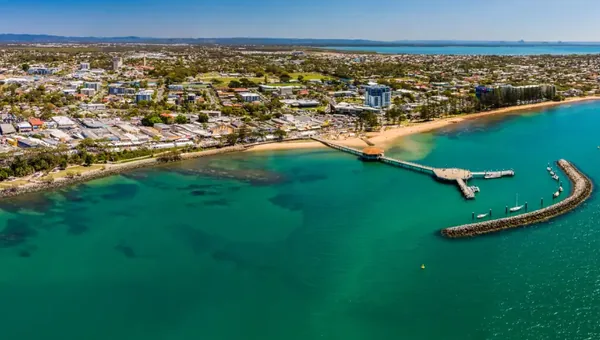
Redcliffe is a peninsula, so coastal hazard exposure varies sharply within walking distance. Storm-surge mapping, council overlay status, and recent flood claims on the bay-facing properties all matter, and SEIFA cannot see them. The body corporate health on any apartment within 500 m of the foreshore also moves the verdict more than the macro signal does. Score the specific listing for a verdict that takes those into account.
A decile 6 IRSAD reading at a raw score of 986 puts Redcliffe just below the national mean, which PropertyRanker scores as mid across the economic_strength, hazard_risk, and entry_point_risk criteria. That middle position means the SEIFA reading neither adds a meaningful tailwind nor flags a structural warning on its own. The more relevant signals for this postcode sit in the demand_pressure and rental_market_depth criteria, which capture the connectivity uplift from the Redcliffe Peninsula rail line that opened in October 2016. Score a specific listing to see how those dynamic criteria interact with the SEIFA baseline for that address.
The postcode does not have a single strategy answer because the suburb is internally divided. The premium coastal strip around Scarborough tends to align with the Capital Growth strategy, targeting a gross-yield anchor of around 3.5 percent, while mid-bay residential pockets lean toward the Balanced strategy at around 5 percent. Some inland streets can still reach the gross-yield thresholds of the High Yield strategy at around 6 percent. Run the specific address through PropertyRanker, because the strategy match shifts noticeably depending on which part of 4020 the listing sits in.
Coastal and peninsula geography is the primary hazard consideration; low-lying parts of Redcliffe carry storm tide and coastal inundation exposure, and the City of Moreton Bay council publishes a flood-check property report tool that lets you verify the specific address. PropertyRanker feeds that hazard dimension through its hazard_risk criterion, where SEIFA at decile 6 contributes a mid-band signal but does not substitute for a property-level flood overlay check. Entry-point risk is the other variable to watch, because a postcode that has accelerated from a lower SEIFA decile over the past decade may have compressed the yield available to later entrants. Score the listing directly to see how current estimated yield sits against the strategy anchor you are targeting.
The line, which opened on 4 October 2016, connects Kippa-Ring to Roma Street and gives peninsula residents direct rail access to the Brisbane CBD. PropertyRanker does not score the rail connection through the SEIFA criteria; instead it flows through demand_pressure and rental_market_depth, which are separate scoring dimensions that capture commuter accessibility and rental absorption patterns. That distinction matters because SEIFA is a snapshot of relative socioeconomic advantage at a point in time, while demand-side criteria can reflect infrastructure-driven shifts more quickly. The result is that the rail line's contribution to Redcliffe's score appears in different criteria than the SEIFA-derived ones, and the combined score is visible when you run a specific listing.
PropertyRanker runs twelve scoring criteria in total, with SEIFA IRSAD informing three of them: economic_strength, hazard_risk, and entry_point_risk. The remaining criteria include demand_pressure, rental_market_depth, and others that draw on listing-level and postcode-level data rather than the census-derived SEIFA score. For a Redcliffe address, the council is City of Moreton Bay, which is the relevant jurisdiction for flood overlays and planning scheme data that feed into the hazard assessment. Because several criteria use live or near-live data, the score for a specific listing may differ materially from a generic postcode summary, so running the actual address is the only way to see the full twelve-criterion breakdown.
Paste a real address. Get a defensible verdict across 12 criteria in around three minutes.
Score a property free